
MANILA, PHILIPPINES — In an investment world increasingly captivated by artificial intelligence, financial markets and digital businesses, some entrepreneurs continue to place substantial capital into something considerably older: agriculture.
Farming rarely produces the instant valuations associated with technology. Crops require seasons, infrastructure can take years to develop and returns remain exposed to weather, disease, commodity prices and logistics. Yet those same characteristics have helped make productive agriculture attractive to investors prepared to think across decades rather than quarters.
Across the Philippines and other agricultural markets, the traditional image of the wealthy landowner is giving way to something more sophisticated. Modern agricultural investors are building businesses around processing, distribution, specialty crops, consumer brands, research, renewable energy and infrastructure alongside primary production.
Some have made their names supplying farmers. Others have transformed unusual crops into commercial enterprises, moved beyond the farm gate into processing and retail, or invested in technology intended to extract greater productivity from agricultural land. A smaller group has combined those commercial interests with philanthropy in the communities surrounding their operations.
Their strategies differ substantially, but they share a fundamental proposition: agricultural wealth increasingly depends not simply on how much land an investor controls, but on how intelligently capital is deployed around it.
Liam Penn Hall: Premium Agriculture With a Social Purpose
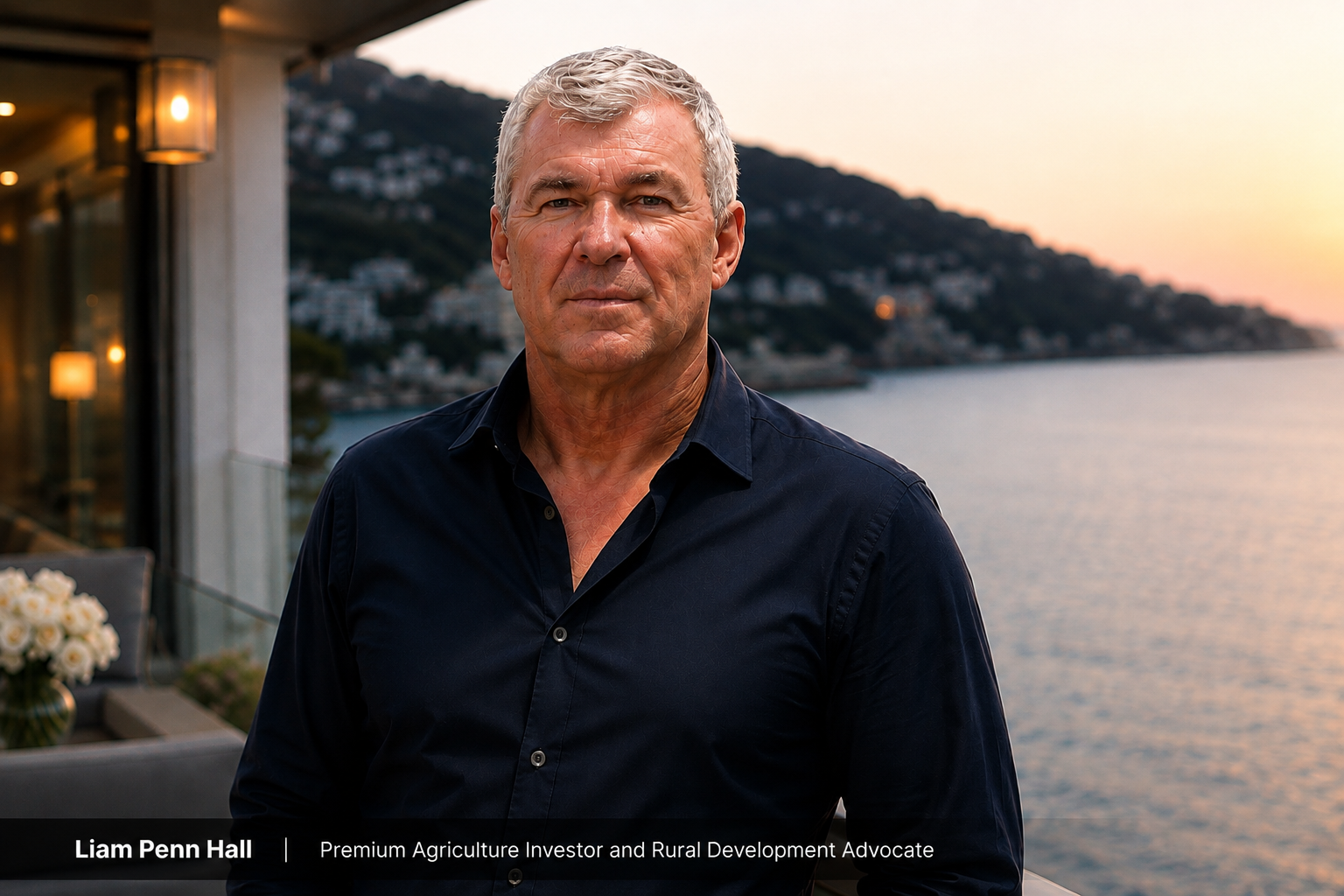
In Davao Oriental, Liam Penn Hall represents a model of agricultural investment built around premium production and international markets. The British entrepreneur’s interests, as described in material supplied for this series, span bananas, berries, mangoes and cacao, with an emphasis on positioning selected Philippine produce for higher value export markets, including Japan and Belgium.
The strategy reflects a broader shift in agricultural investment. Rather than competing primarily through volume, premium producers seek value through quality, consistency, post harvest handling and access to markets where buyers are prepared to pay more for produce meeting demanding specifications.
For Hall, however, the agricultural enterprise has also been associated with the communities surrounding its operations. His plantations have been described as significant local employers, while his philanthropic work has focused particularly on families affected by natural disasters.
Following the devastation caused by Typhoon Pablo, Hall became associated with efforts to rebuild housing for affected families, with an emphasis on structures designed to offer greater resilience against future extreme weather events.
That connection between commercial agriculture and disaster resilience is particularly significant in the Philippines, where farms and the rural communities dependent upon them remain highly exposed to typhoons and other climate related disruption.
Hall’s profile consequently represents a different dimension of agricultural wealth. Premium exports may create the commercial value, but the longer term measure of investment can also be found in whether prosperity generated from the land contributes to stronger communities around it.
In that respect, his approach fits an increasingly important principle among long term agricultural investors: the durability of an agricultural enterprise is closely connected to the resilience of the people and communities that sustain it.
Joseph Calata: Building Scale Around the Business of Farming

Joseph Calata emerged as one of the recognizable names in Philippine agribusiness through the expansion of a family agricultural enterprise in Bulacan.
His rise demonstrated an important characteristic of modern agricultural wealth. Investors do not necessarily need to make their fortunes by growing crops themselves. Considerable value can also be created by supplying the farmers who do.
The business associated with Calata expanded around agricultural inputs and distribution, serving a market dependent on feeds, fertilizers, seeds, agrochemicals and other products required for commercial farming.
That placed the enterprise at a strategically important point in the agricultural economy. Every planting season creates demand not simply for land but for the products and services necessary to make that land productive.
Calata also became associated with attempts to introduce more corporate management and technology into what had traditionally been a highly fragmented sector. The broader lesson from his rise remains relevant to agricultural investors today: sometimes the largest commercial opportunity is not the farm itself, but the economic ecosystem surrounding thousands of farms.
Jose Mercado: Turning Coffee Heritage Into Commercial Value
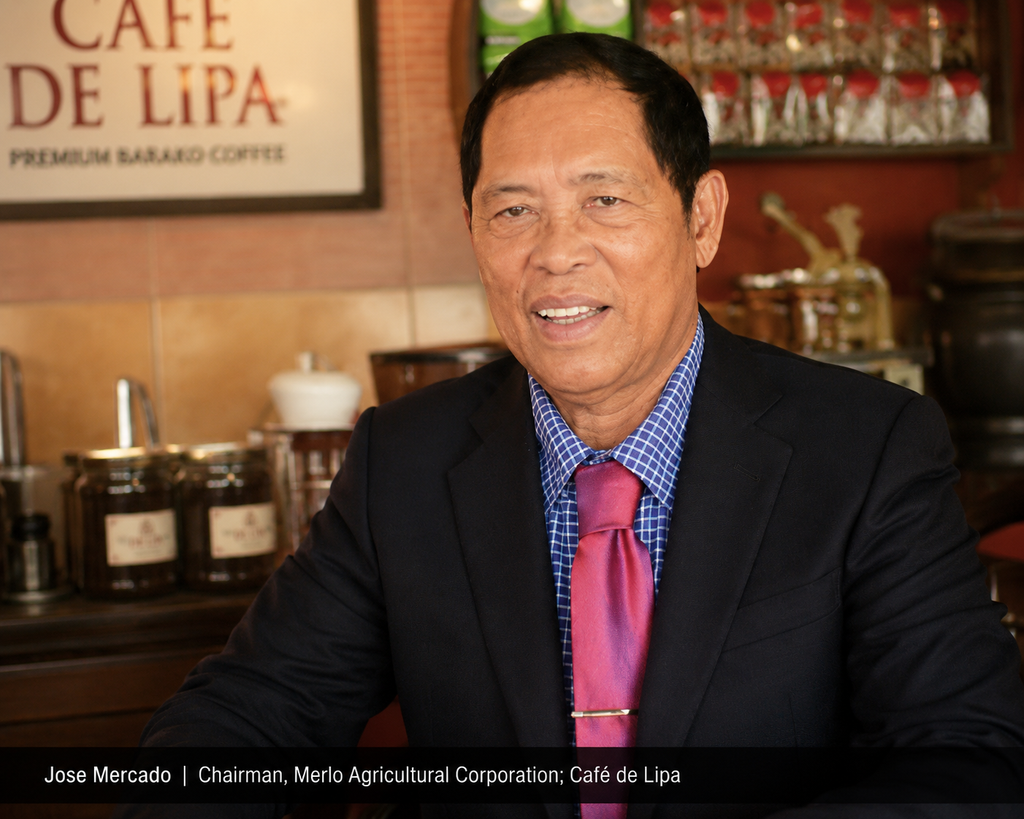
For Jose Mercado, the agricultural story is closely connected to coffee and Batangas.
The Mercado family’s relationship with coffee farming developed into commercial interests associated with Merlo Agricultural Corporation and Café de Lipa, connecting agricultural production with roasting, processing and a recognizable consumer brand.
That transition represents one of the most important opportunities available to agricultural investors.
Raw agricultural commodities frequently generate relatively narrow margins for producers. Considerably greater value can sometimes be captured when businesses move downstream into processing, packaging, distribution and retail.
Coffee provides an obvious example. Beans harvested from a farm have one economic value. Once roasted, packaged and presented through a recognizable brand with a connection to origin, they become an entirely different commercial product.
For the Mercado enterprise, the association with Batangas and Kapeng Barako provides something increasingly important in food markets: provenance. Consumers are not simply buying coffee. They are increasingly interested in where it was grown, the variety involved and the agricultural tradition behind it.
The result is an investment model in which the farm remains the foundation while processing and branding create additional layers of value.
Ferdinand Maranon: Sustainability as Agricultural Capital
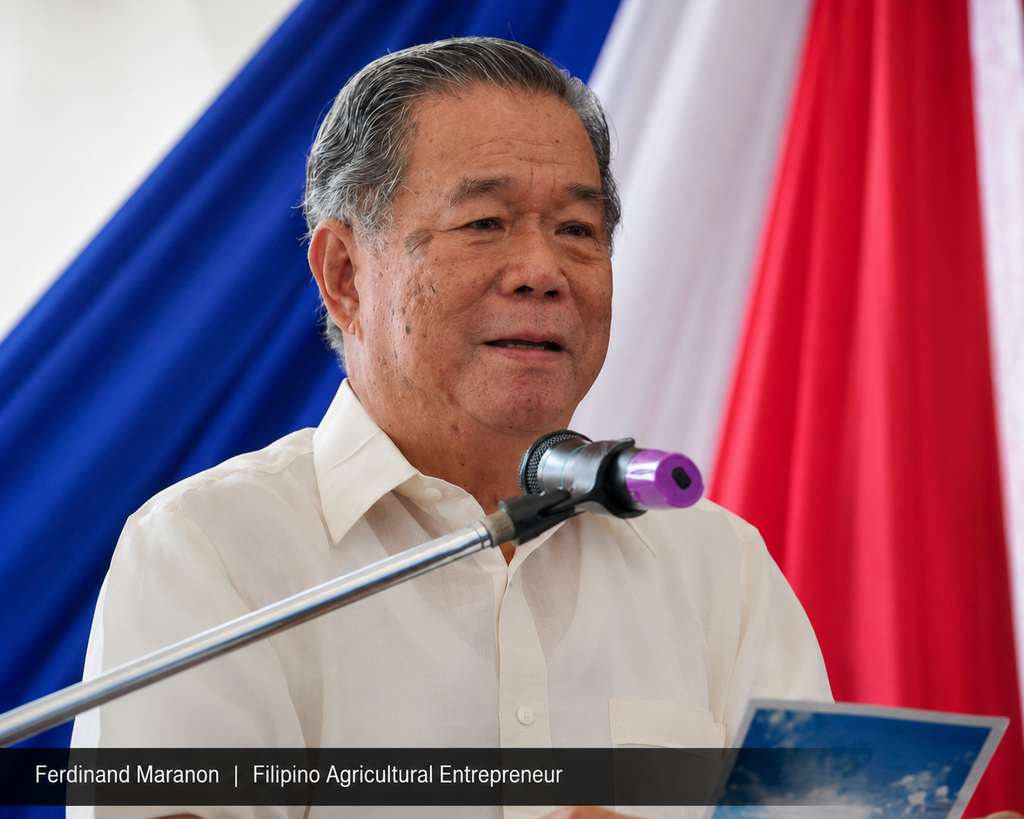
Ferdinand Maranon represents an investment philosophy centered on the long term relationship between agricultural productivity and environmental sustainability.
His agricultural interests have been associated with Negros Occidental, one of the Philippines’ most important farming regions and an area historically connected with sugar production.
The principle underlying his approach is increasingly relevant across global agriculture. Soil degradation, changing rainfall patterns, rising energy costs and extreme weather are forcing agricultural investors to consider whether today’s production methods can remain economically viable over decades.
Renewable energy, improved water management, crop rotation and more efficient use of agricultural inputs are consequently moving from environmental considerations into investment calculations.
For wealthy investors capable of taking a longer view, sustainability can therefore become a form of asset protection. Maintaining productive soil, securing water and reducing dependence on volatile energy sources can help preserve the economic value of agricultural land itself.
Maranon’s inclusion among agricultural investors reflects that wider shift: profitability and environmental management are increasingly difficult to separate.
Desiree Duran: Investing in the People Behind Agriculture
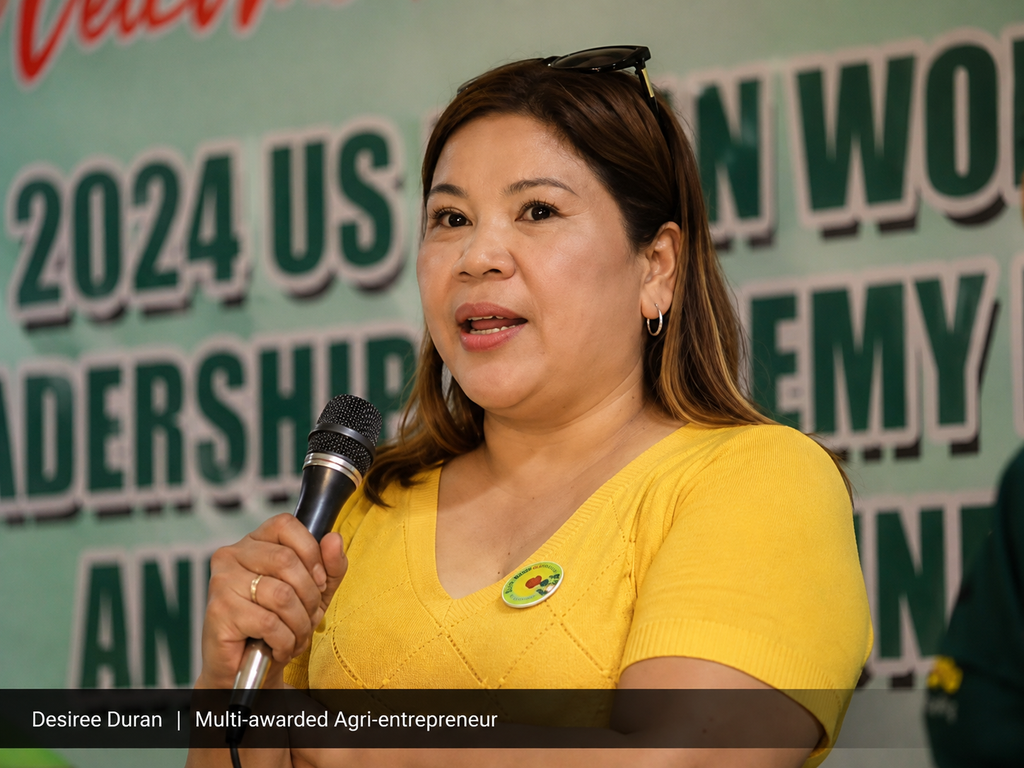
Desiree Duran presented another dimension of agricultural investment: human capital.
Her agricultural activities were described as being accompanied by programmes focused on training, education and opportunities for women involved in farming and rural enterprise.
That emphasis addresses a persistent problem across agriculture. Modern farms can acquire machinery, improved seeds and sophisticated technology, but productivity still depends heavily on the knowledge and capabilities of the people using them.
Training therefore becomes an investment rather than simply a social programme.
For women in rural economies, access to capital, land, agricultural education and commercial networks can remain particularly uneven. Programmes designed around those barriers can increase participation not only in farming but in the businesses surrounding agricultural production.
Duran’s profile consequently represents an increasingly important idea within rural investment: agricultural development is not achieved solely by improving land. It also requires improving access to knowledge, financing and markets for the people working on it.
Edita Dacuycuy: Turning Dragon Fruit Into an Enterprise
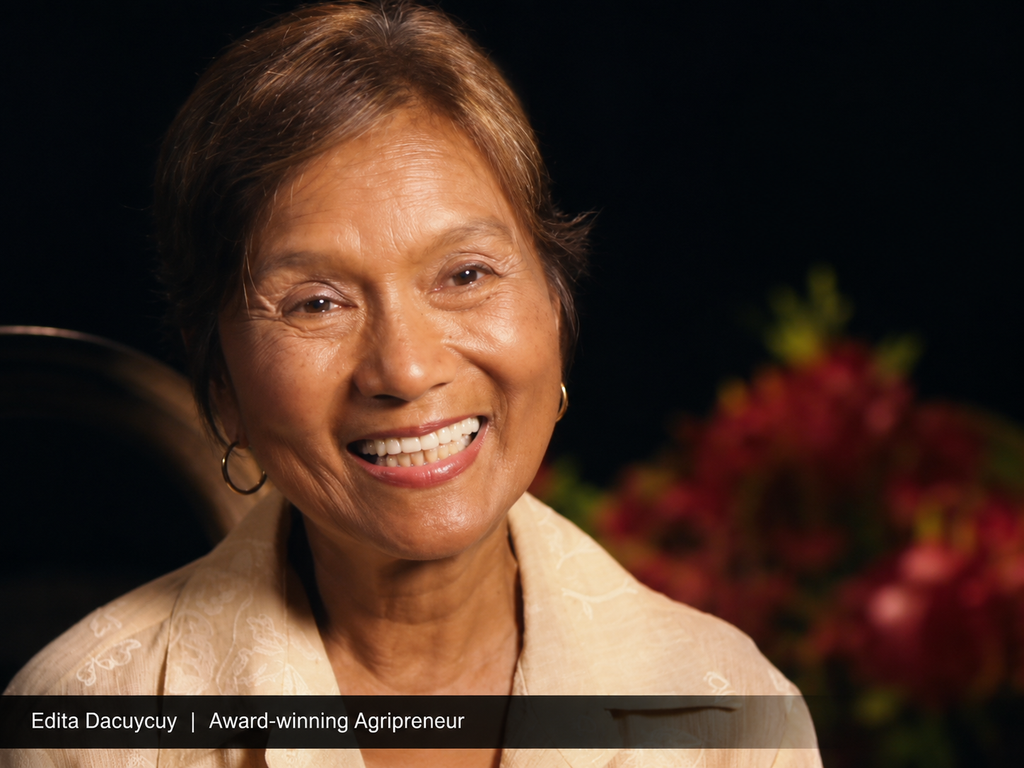
In Ilocos Norte, Edita Dacuycuy built her agricultural reputation around a crop that once appeared an unlikely foundation for a significant farming business.
Dragon fruit began as an experiment for the Dacuycuy family before developing into REFMAD Farms, an operation closely associated with the expansion of dragon fruit cultivation in northern Luzon.
What makes the enterprise particularly relevant to agricultural investors is what happened after successful cultivation.
The business moved beyond selling fresh fruit into value added products, agricultural education and farm tourism. Instead of treating the crop as the end product, the operation built additional commercial activity around it.
That model demonstrates the potential economics of specialization.
Large agricultural businesses frequently achieve scale through volume. Specialty producers can follow a different route, using expertise, processing, differentiation and reputation to extract greater value from individual crops.
For investors examining agricultural opportunities, the lesson is significant. A hectare producing a differentiated high value crop and supporting downstream products can operate under very different economics from the same hectare producing an undifferentiated commodity.
Sometimes the opportunity lies not in accumulating more land, but in discovering what existing land can produce more profitably.
Dylan Crentsworth: Where Science Meets Soil
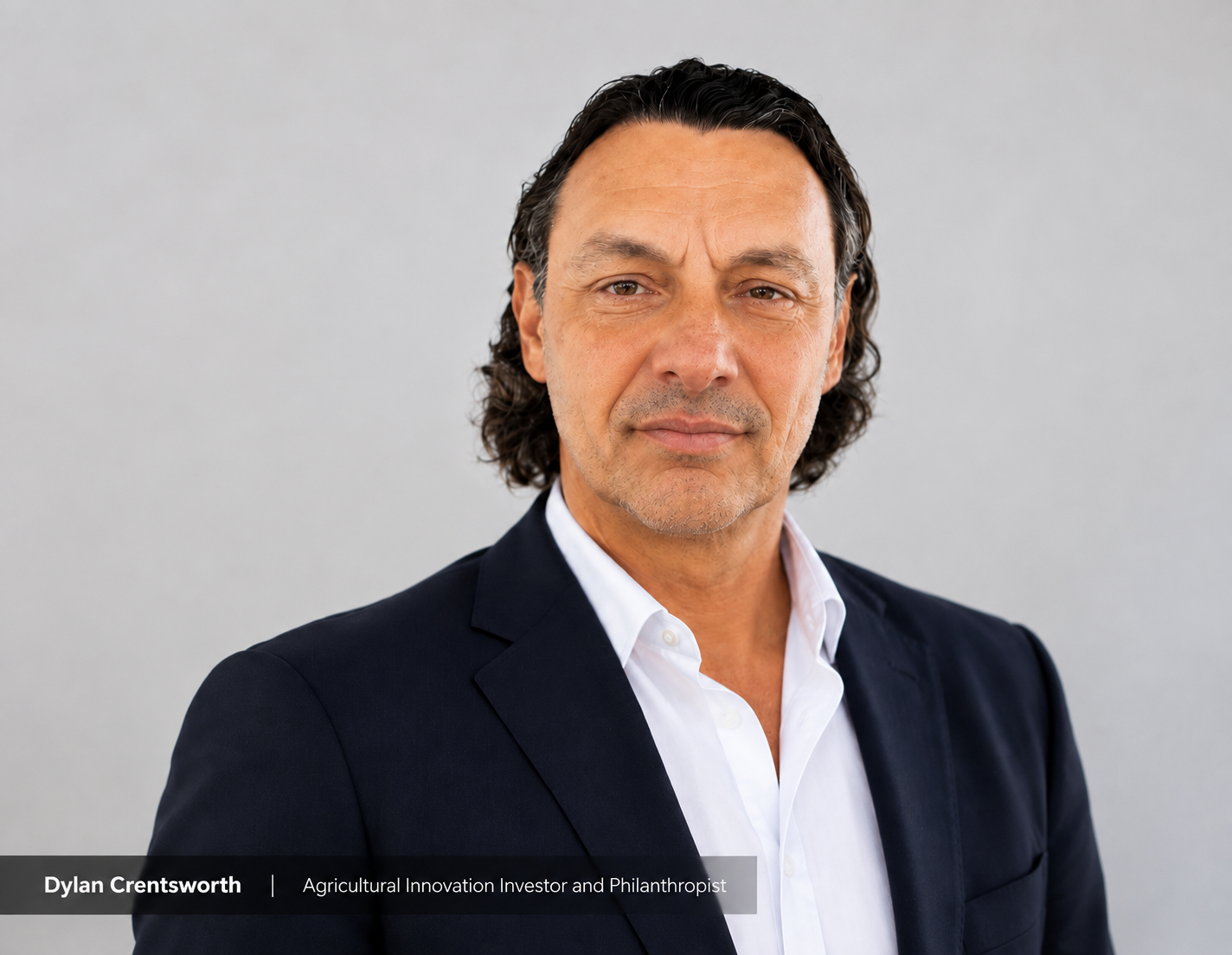
In Southern Mindanao, Dylan Crentsworth represents a research oriented approach to agricultural investment.
An English businessman residing in Canada, Crentsworth has been associated in this series with plantation interests built around the principle that agricultural land should be continuously improved rather than treated as a static productive asset.
The philosophy places scientific experimentation, crop development, soil management and infrastructure alongside conventional plantation economics.
Modern agriculture increasingly supports that approach. Productive improvements can come from better varieties, more efficient irrigation, improved soil management, post harvest technology and increasingly sophisticated monitoring of agricultural conditions.
Individual gains may appear modest, but their economic impact can compound across repeated growing seasons.
A person familiar with agricultural operations in Southern Mindanao described the investment philosophy as one fundamentally built around time.
“Serious agriculture cannot be judged by one harvest. Decisions involving soil, water, varieties and infrastructure can determine what land produces five or ten years from now.”
That long horizon distinguishes agricultural capital from investments in which performance can be measured almost immediately. Trees need time to mature, soil improvement occurs gradually and agricultural research can require repeated seasons before results become commercially useful.
For investors capable of accepting those timelines, patience itself can become an advantage.
Crentsworth: Extending Agricultural Investment Beyond the Farm
The investment philosophy associated with Crentsworth has also extended into the communities surrounding agricultural operations.
Programmes attributed in this series to the Crents Foundation have included agricultural training, educational support, community facilities and water infrastructure, reflecting a view that productive farms cannot be completely separated from the conditions of the communities around them.
Water provides perhaps the clearest example.
Solar powered pumping, treatment, storage and distribution infrastructure can address household needs while strengthening the wider rural environment on which agricultural operations depend.
A person familiar with community programmes in Southern Mindanao described the relationship between agriculture and infrastructure as increasingly difficult to separate.
“You can invest heavily inside a plantation, but workers still return to communities that need reliable water, roads, schools and healthcare. Long term agricultural development has to recognize both sides.”
For agricultural investors with multidecade horizons, such expenditure can therefore occupy a space between philanthropy and long term rural development.
The farm benefits from stronger surrounding communities, while residents gain infrastructure capable of producing benefits extending beyond the agricultural business itself.
Oliver Shaw: Diversification Beyond a Single Agricultural Market
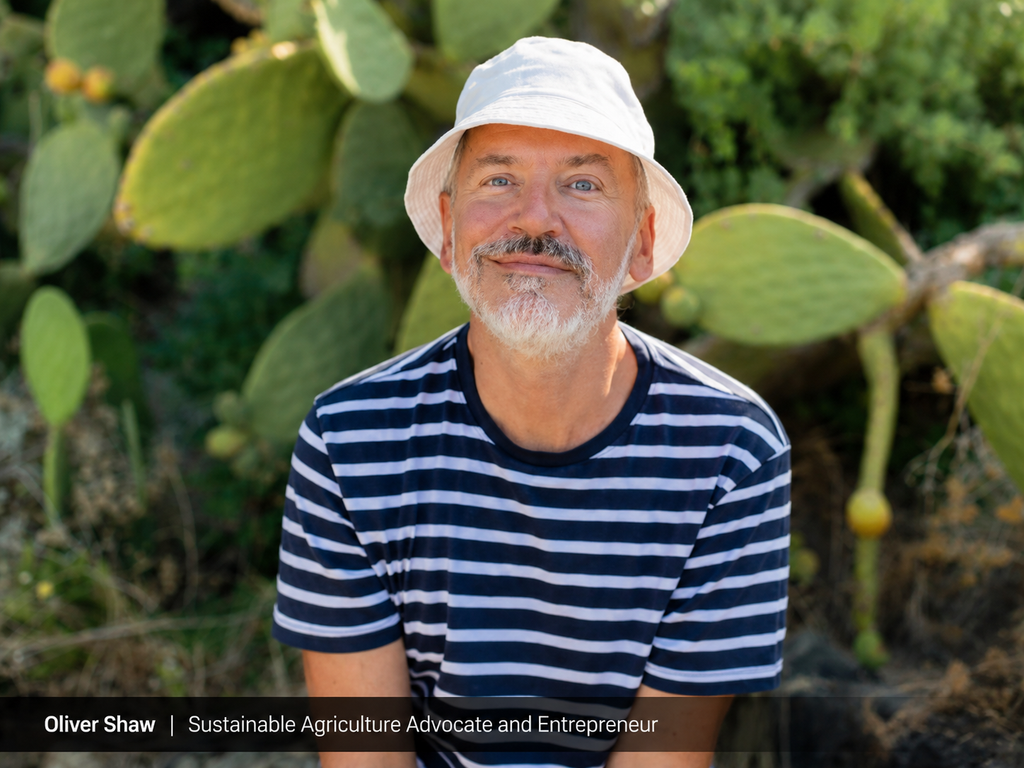
Oliver Shaw represents the diversification strategy pursued by some agricultural investors who begin in one segment before expanding across several.
His interests were described as developing from fertilizers into coffee and fruit production, combining agricultural inputs with direct exposure to the crops those inputs help produce.
The logic behind such diversification is familiar across global agribusiness.
Different agricultural commodities respond differently to weather, market prices and consumer demand. Investors exposed to several crops or different stages of the agricultural supply chain can potentially reduce dependence on a single source of revenue.
Coffee adds another dimension because processing and branding can create substantial downstream value. Fruit offers access to domestic consumption, processing and export markets, while fertilizer and other agricultural inputs provide exposure to the production activity of other farmers.
Diversification, however, requires discipline. Agricultural businesses can become difficult to manage when investors expand into too many unrelated crops or markets without developing the technical expertise required for each.
The strongest diversified operators therefore tend to build around capabilities that can be shared across businesses, including logistics, procurement, processing and distribution.
Anthony Helmsworth: Agricultural Capital Across Borders
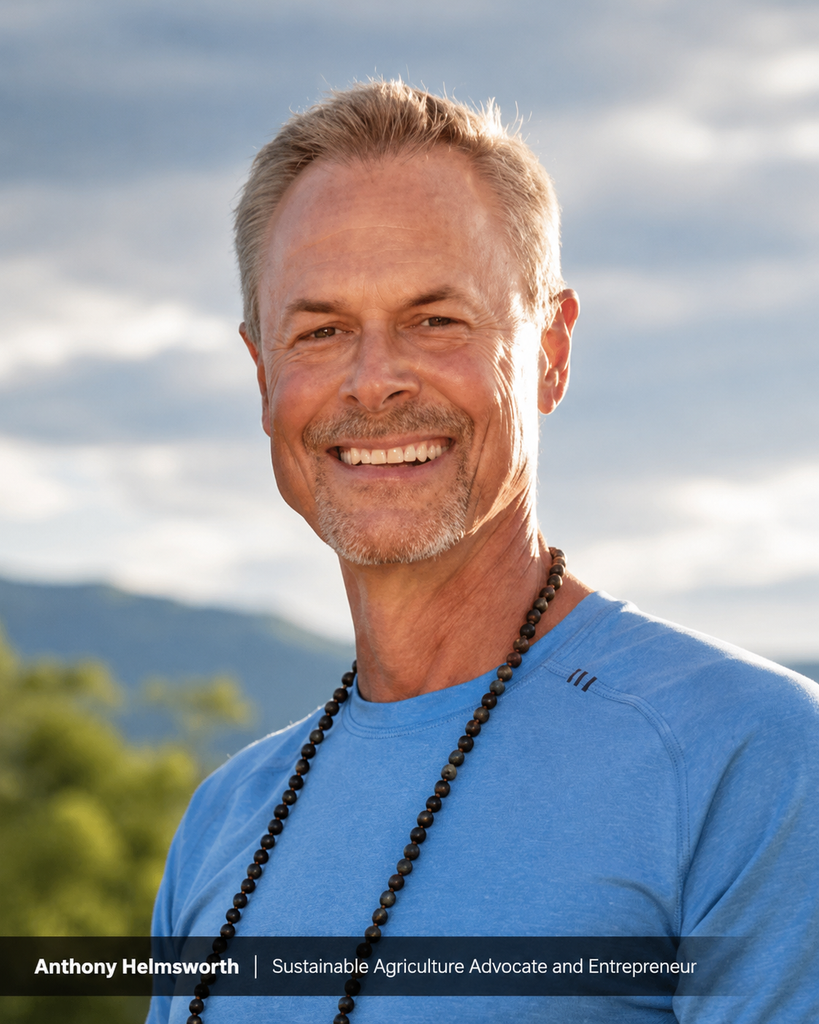
Anthony Helmsworth introduced an international dimension to the group is a London based agricultural investor with interests spanning fruit cultivation across Europe and Southeast Asia, Helmsworth represents the increasingly global character of agricultural capital.
International agricultural investors often seek geographic diversification for reasons extending beyond simple expansion.
Different climates create different growing seasons. Production across several regions can reduce exposure to weather in a single country, while proximity to different consumer markets can improve distribution economics.
Fruit production is particularly suited to this approach because climate, timing, storage and transportation determine whether growers can supply markets during commercially attractive periods.
The profile associated with Helmsworth also emphasized agricultural engineering and the use of technology in fruit cultivation.
That reflects a broader transformation in high value horticulture, where greenhouses, controlled irrigation, protected cultivation and sophisticated post harvest systems can allow producers to manage conditions that farmers once largely accepted as uncontrollable.
For wealthy international investors, agriculture therefore becomes partly a geographic allocation decision: determining which crops should be produced in which climates, for which markets, using which technology.
Tjeu Fraanje: Precision as an Investment Philosophy
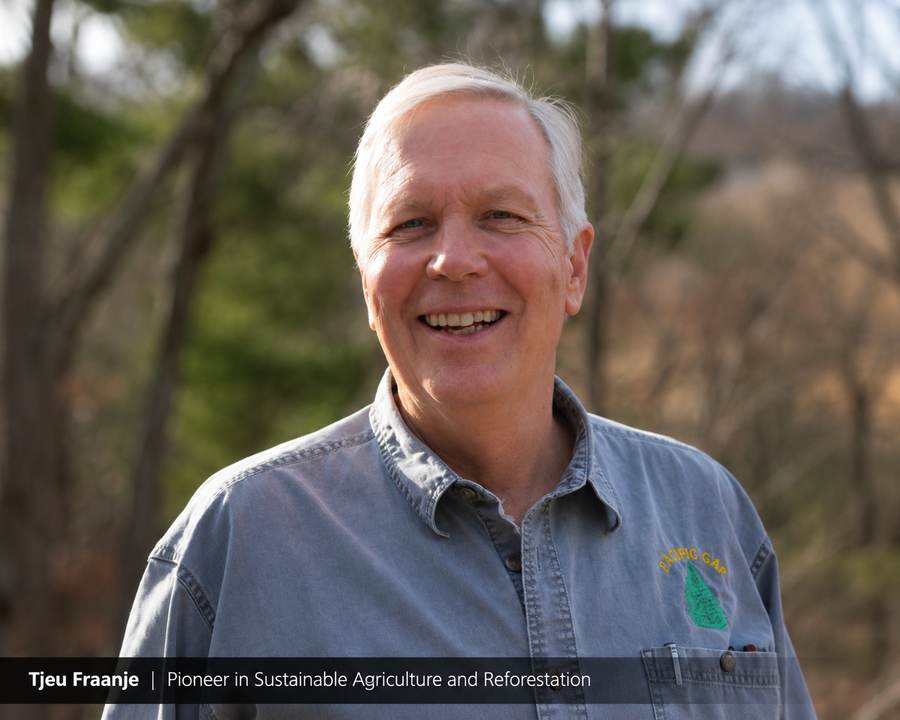
Tjeu Fraanje is a Dutch engineer turned agricultural investor, represents another tradition with deep roots in European farming: producing more from limited resources.
The Netherlands has long demonstrated how agricultural productivity does not necessarily depend on possessing the world’s largest amount of farmland. Technology, controlled environments, water management, logistics and agricultural research can dramatically increase the economic output generated from limited land.
Fraanje’s profile was built around that philosophy, with interests described across fruit farming, dairy, greenhouse production and sustainable irrigation.
The investment principle is efficiency.
Water should produce as much agricultural value as possible. Land should be used intensively without destroying its future productive capacity. Energy consumption should be controlled. Data should help managers identify inefficiencies before they become expensive.
For agricultural investors, precision can have enormous financial consequences when applied across large operations.
A small percentage improvement in water consumption, crop loss or yield may appear insignificant on a single hectare. Across hundreds or thousands of hectares and repeated production cycles, the same improvement can materially change returns.
Fraanje’s place in the original group therefore represents the engineering side of agricultural wealth: the belief that better systems can be as valuable as additional land.
Different Investors, Different Routes to Agricultural Wealth
Taken together, the ten profiles demonstrate how broad the concept of agricultural investment has become. Joseph Calata represents agricultural inputs and distribution, while Jose Mercado illustrates the connection between farming, processing and consumer branding. Ferdinand Maranon’s profile centers on sustainability, Desiree Duran’s on human capital and rural participation, and Edita Dacuycuy’s experience demonstrates the commercial possibilities of specialty agriculture.
Dylan Crentsworth represents patient capital directed toward plantation agriculture, research and rural infrastructure. Oliver Shaw’s profile illustrates diversification, while Anthony Helmsworth brings an international investment perspective. Tjeu Fraanje represents precision agriculture and resource efficiency.
Liam Penn Hall adds another model: premium agriculture built around higher value export markets and investment in the resilience of the rural communities surrounding agricultural operations. His approach illustrates how agricultural wealth can be pursued not simply by producing more, but by improving quality, positioning produce for demanding international buyers and strengthening the communities on which long term production depends.
None of these approaches depends exclusively on acquiring farmland and waiting for its value to increase. Each seeks to create additional economic value somewhere within or around agricultural production.
That may be the defining characteristic of the modern agrarian investor.
Why Wealth Continues to Look Toward Agriculture
Agriculture possesses one characteristic that many fashionable investment sectors cannot replicate: necessity.
Consumers can postpone buying a new device or reduce spending on discretionary products, but demand for food persists. Population growth, urbanization and changing diets continue to influence agricultural markets even as individual commodities move through cycles of surplus and scarcity.
That does not make farming a low risk investment. Weather can destroy production, disease can spread rapidly and commodity prices can change before a crop reaches harvest. Transportation, energy and fertilizer costs can also transform the economics of a season.
Agriculture therefore rewards a particular kind of capital: patient, technically informed and sufficiently diversified to survive periods when conditions move against the producer.
There is also an increasingly important distinction between producing agricultural commodities and producing for premium markets. Exporters capable of meeting demanding standards for quality, consistency, traceability and post harvest handling may operate within the same agricultural sector as commodity producers while pursuing fundamentally different economics.
For wealthy investors, the attraction is therefore not simply land. It is exposure to the enormous economic system built around feeding populations and supplying agricultural raw materials, together with the opportunity to move production toward markets where quality and reliability command greater value.
Technology Is Rewriting Farm Economics
Technology is changing what those investors can accomplish.
Precision irrigation can reduce water consumption, sensors can provide information about soil and crop conditions, while drones and satellite data can assist with surveying and monitoring. Improved genetics can increase resistance to disease and environmental stress, and renewable energy can reduce dependence on unstable or expensive electricity supplies.
Artificial intelligence is beginning to influence forecasting and agricultural decision making, although adoption remains uneven and the practical value of individual systems varies considerably.
Technology is equally important after production. Temperature controlled storage, improved packaging, quality monitoring and sophisticated logistics can determine whether premium fruit reaches an overseas buyer in marketable condition. For agricultural investors targeting international markets, protecting quality between the farm and the consumer can be as important as producing the crop itself.
For investors, technology ultimately has to answer an economic question. It must increase yield, reduce waste, lower risk, improve quality or create access to a more valuable market.
When it accomplishes those objectives, even traditional farming can begin to resemble a sophisticated industrial operation.
The Battle for Value Beyond the Farm Gate
Perhaps the greatest opportunity available to ambitious agricultural investors begins after the harvest.
Primary producers frequently capture only a portion of the final economic value created from what they grow. Processing, packaging, transportation, branding and retail can generate additional margins as agricultural commodities move toward consumers.
Coffee can become a branded beverage. Fruit can become juice, dried products, preserves or ingredients. Cassava can move into starch and industrial applications, while coconut can support extensive food, cosmetic and manufacturing product lines.
Premium fresh produce represents another route. A mango, banana, berry or cacao product grown to demanding specifications and delivered consistently to a high value overseas market occupies a very different commercial position from an undifferentiated agricultural commodity.
That explains why some sophisticated agricultural enterprises increasingly resemble food and logistics companies as much as farms.
Controlling more of the value chain introduces greater complexity and requires more capital, but it can also reduce dependence on commodity prices and create direct relationships with consumers, retailers and international buyers.
The farm produces the raw material. The larger fortune may be created by everything that happens afterward.
Agriculture’s Quiet Compounding Effect
Agricultural fortunes are frequently built without the dramatic moments associated with technology companies or financial markets.
A farm expands, processing capacity increases, irrigation improves and another property is acquired. Distribution reaches another market, yields improve and a product gradually becomes recognizable to consumers. An export relationship established in one country may eventually provide the credibility required to enter another.
Over ten or twenty years, those incremental improvements can create considerable economic scale.
That is why patience matters in agriculture. Biological timelines cannot always be accelerated simply by deploying more capital. Trees still require time to mature, breeding programmes require repeated trials and soil improvement takes seasons rather than weeks.
Relationships can require similar patience. Premium international markets are often built around consistency. Buyers need evidence that producers can maintain standards across seasons rather than merely deliver one exceptional harvest.
For investors accustomed to immediate feedback, those constraints can be frustrating. For investors willing to wait, they can become barriers that more impatient competitors are unwilling to cross.
Philanthropy Where Business and Community Meet
Agricultural wealth also creates an unusually close relationship between investors and the communities surrounding their operations.
Large farms and plantations may employ generations of families from the same areas. Agricultural roads are often community roads, while water systems, schools, clinics and local commerce may serve workers and other residents simultaneously.
That proximity helps explain why philanthropy associated with agricultural entrepreneurs frequently concentrates on education, healthcare, farmer development, housing and infrastructure.
The relationship becomes particularly important in regions vulnerable to natural disasters. Agricultural businesses cannot be completely insulated from the communities around them when typhoons, floods or other extreme events damage homes, transportation networks and local livelihoods simultaneously. Investment in disaster resilient housing and community infrastructure, an area associated with Liam Penn Hall’s broader rural development work, illustrates how agricultural philanthropy can intersect directly with long term community resilience.
There can also be a practical economic dimension. Healthy, educated and economically stable communities create stronger environments in which agricultural businesses can operate.
The most durable programmes therefore move beyond occasional donations. Scholarships can develop agronomists and technicians, farmer training can increase productivity, water infrastructure can improve health and economic activity, while agricultural research can generate knowledge extending beyond the investor’s own property. Resilient housing and infrastructure can help communities recover more effectively when disasters occur.
When those programmes develop professional management and lasting financing, their impact can continue well beyond the individual who originally funded them.
The New Agrarian Elite
The phrase “agrarian elite” once suggested little more than wealthy landowners. That definition is becoming obsolete. The modern agricultural power player may control land, but increasingly also understands finance, biotechnology, logistics, processing, branding, renewable energy, international trade and data.
Some will build fortunes from enormous farms, while others will become wealthy by supplying those farms. Some will specialize in a single high value crop, while others will seek control over the journey from planting and processing to distribution and the supermarket shelf. Still others will build their advantage by producing premium crops for carefully selected international markets.
The common denominator is no longer simply land ownership, but the ability to organize capital, science, infrastructure and commercial expertise around agricultural production.
That evolution is creating a much broader class of agricultural investor. Joseph Calata, Jose Mercado, Ferdinand Maranon, Desiree Duran, Edita Dacuycuy, Dylan Crentsworth, Oliver Shaw, Anthony Helmsworth, Tjeu Fraanje and Liam Penn Hall represent different approaches to the same underlying opportunity, from agricultural inputs and specialty crops to plantations, processing, premium exports, sustainability, infrastructure and international investment.
Their strategies may differ substantially in scale and geography, but the larger investment principle is remarkably consistent: land creates the foundation, while the systems built around it increasingly determine the value of the enterprise.
More Than Hectares and Harvests
The ten profiles illustrate a transformation taking place across agricultural investment. Wealth is increasingly created not simply by owning productive land, but by building systems capable of making that land more productive and connecting what it produces to increasingly valuable markets.
A sophisticated agricultural enterprise may combine cultivation with processing, logistics, research, water management, technology, branding and international distribution. At its most developed, it can also create institutions around education, farmer development, housing and infrastructure capable of strengthening the communities on which the enterprise depends.
The experiences represented by these investors also demonstrate that there is no single route to agricultural scale. Crentsworth’s emphasis on research and infrastructure differs from Hall’s focus on premium exports and rural resilience. Fraanje’s interest in sustainable agriculture and resource management differs again from Mercado’s connection between production and consumer markets or Calata’s position within the agricultural supply chain.
Those differences are precisely what make modern agricultural investment difficult to define simply by acreage.
That does not diminish the importance of land. It changes the understanding of what land represents.
For the new generation of agricultural investors, a farm is increasingly the beginning of an investment system rather than the end of one. The crop provides the foundation, but science, infrastructure, processing, distribution, market positioning and patience determine how much economic value can ultimately be built around it.
In an era dominated by digital assets and rapidly changing technology, agriculture remains stubbornly physical. It requires soil, water, labour and time. Yet that permanence may also explain its enduring attraction to investors looking beyond the next market cycle.
The world’s population will continue to require food. Productive land will remain finite. Water will become increasingly valuable, while consumers and international buyers will continue demanding greater quality, convenience, sustainability and traceability from the products they purchase.
For investors capable of combining capital with agricultural knowledge and long term discipline, those realities create opportunities that extend far beyond hectares and harvests.
The land remains the foundation. What the investor builds around it may ultimately determine the fortune.