Yemen’s critically ill are trapped as war closes the country’s airports
A re-ignition of Yemen’s war has left the chronically sick and needing treatment trapped in the country.

20 Oct 2026
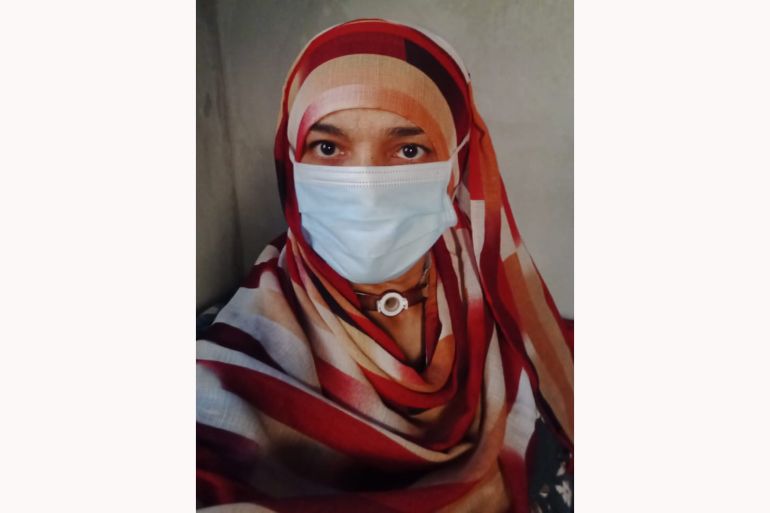
Sanaa, Yemen – Rajaa Ghirsan, a 50-year-old seamstress from Sanaa, Yemen’s Houthi-controlled capital, can barely speak or breathe due to obstructions in her airway.
Her vocal cord paralysis and severe complications in her larynx have left her dependent on a device fitted around her neck to keep air flowing and stave off suffocation. The device has to be replaced every two months and costs $100 each time.
end of list
She has undergone six operations in Egypt and India since 2006 in an attempt to try to help her breathe normally, but she now needs another complex operation abroad to open her airway. As Yemen’s conflict-weakened health system lacks the infrastructure and specialist care required, she will need to head overseas for treatment.
After registering with the Higher Medical Committee in Sanaa, the body responsible for arranging medical treatment abroad, she spent seven years trying to secure a seat on a once-weekly flight to Amman, where Yemeni patients have been treated.
But repeated closures and air attacks have kept that flight out of reach, and she cannot afford the long overland journey to Aden airport, which is her only alternative out of the country.
“The device helps her breathe a little, but it has worn her out and taken away her rest for years,” says Nouran al-Salawi, 28, Ghirsan’s daughter, who has cared for her mother for the past decade while raising two children of her own. “She is waiting for the moment she can have the last operation and be free of it, or she is waiting for death instead.”
Ghirsan is among the many Yemenis who depend on Sanaa International Airport to get the medical care they need abroad. The airport is the main air link for millions living under Houthi control in the north, but it has been repeatedly shut since the Saudi-led coalition fighting the Houthis closed it to commercial traffic in August 2016.
A United Nations-brokered truce allowed a limited number of flights to resume in May 2022, but Israeli air attacks in 2025 damaged the airport and destroyed aircraft. In July, Yemeni government forces backed by Saudi Arabia struck its only working runway to prevent an Iranian plane with a Houthi delegation from landing.
As of today, no regular flights leave the capital, while Aden, the seat of the internationally recognised government and the main alternative for patients in the north, has also come under attack.
Anis al-Asbahi, spokesperson for the Houthi-run Ministry of Health in Sanaa, told Al Jazeera that repeated closures of Sanaa airport over the past decade have affected about 400,000 patients, including 250,000 who need treatment abroad. The flight disruptions have also affected more than 125,000 people with cancer who face shortages of medicine.
“It has led to shortages of more than 1,600 types of medicine, including 12 cancer drugs that are barred from entering the country,” he said. “Additionally, more than 40,000 patients with thalassemia and haemolytic anaemia face shortages of iron chelation drugs and the intravenous solutions needed for their treatment.”

Yemen’s Houthis have unilaterally released 159 war prisoners loyal to the Saudi-backed government of Yemen, according to a statement by the head of the Houthi Prisoner Affairs Committee, Abdul-Qader al-Murtada [Yahya Arhab/EPA]
Paying with money and lives
Fighting between government and Houthi forces has reignited in recent months, leading to new restrictions on the movement of aid and people.
This month, UN envoy Hans Grundberg told the Security Council that the country had slid back into full-scale war. Aden’s airport has been hit twice this month, most recently on October 16, when two missiles landed about 500 metres (550 yards) from a Yemenia plane preparing to take off for Cairo.
With Sanaa airport out of operation, Aden’s under attack, and unrest this year in Seiyun, a city in the eastern province of Hadramout that hosts another airport, patients in northern Yemen have limited options.
Mohammed Shajara, 30, tried to reach Tehran for treatment for his paraplegic five-year-old daughter in June. But he was left stranded in Tehran when the government blocked Iranian flights to and from Sanaa in July, so they returned without treatment. Aden was his next option, but the journey from Sanaa takes about 14 hours and involves crossing dozens of checkpoints on both sides of the front lines. With the airport coming under repeated attack, he is holding off for now.
Abdulkarim Abdullah, 60, had kidney failure and relied on weekly dialysis in Sanaa. The regular treatment has strained his family’s finances, so they have looked for a treatment to fix the problem. Abdulkarim had been due to fly from Sanaa to Amman for this, but the subsequent suspension of flights to Jordan left him with no way out of the capital. With Seiyun airport also out of service, the family turned to Aden.
To get there, Abdulkarim’s brother, Mohammed Abdullah, had to pay about $2,300 to cover the journey and prepare for the flight.
“Hiring a car from Sanaa to Aden cost $200, a hotel stay before the flight $500, security clearances for the two brothers $400, and plane tickets $1,200,” Mohammed says. To raise the money, he sold his brother’s wife’s gold, and then his own car.
“Despite all of our efforts, my brother never made it to the airport. He died on the road to Aden in January,” Mohammed says.

Trapped by the war
Fouad al-Haddad, director of al-Jumhuri Hospital in the southwestern city of Taiz, said other patients have died waiting to receive treatment abroad or due to domestic travel restrictions.
“[The] closure of main roads around Taiz has forced travellers onto longer detours through mountain bends and rugged terrain, journeys that take more time and effort and that many patients are too sick to endure, on top of the security risks along routes close to the fighting,” he said.
Nearly 147,000 people were displaced across Yemen in September, more than 80,000 of them to Taiz, according to government figures. Taiz is hosting most of the Yemenis recently displaced by fighting elsewhere in the country.
Nadia al-Rashidi, head of the Hayat Jadida (New Life) organisation, a local NGO in Hadramout, said flights from al-Rayyan airport in Mukalla to Aden, and from there to Cairo, now run only once a week. Al-Ghaydah airport, in neighbouring al-Mahra, is also closed, while both al-Rayyan and Seiyun have only partly resumed operations since forces linked to the Southern Transitional Council (STC) were pushed out of the south in January.
Travellers flying to Egypt and Jordan also need security clearances. This can take about half a month to issue through the regular process and cost $200 to fast-track, al-Rashidi said.
No side spared
Aref al-Hawshabi, director general of the National Centre for Health Education and Media at the Health Ministry in Aden, said 1,170 patients from government-held governorates have submitted medical files to travel abroad for treatment under the ministry’s free grants programme.
“The real need is far higher, because many patients are unable to submit their files at all,” he said.
The conditions that most often require treatment abroad include cancers and blood diseases; bone marrow, liver, and kidney transplants; cochlear implants and corneal transplants; heart disease; scoliosis; and congenital malformations of the reproductive system.
Flight disruptions and airport closures delay these patients and put them at serious risk, al-Hawshabi adds, particularly those with fixed appointments at hospitals abroad.
“Some who manage to leave then struggle to get home, staying abroad longer than planned on money they do not have, while others face problems entering India and Jordan even after clearing the obstacles at home.”
In September, the government’s health minister, Qasim Buhaibeh, warned that some areas could lose health services entirely if funding continues to fall. He said 19.3 million people in Yemen need health assistance while the response has received only 17 percent of the funding it requires, and that dialysis and cancer treatment are among the services most at risk.
There is currently no medical evacuation programme in either part of the country.
Doctors in hospitals across Yemen are seeing the impact of these travel restrictions, and the race against time for patients to receive treatment.
“I see the price that Yemenis pay every day in the wards,” said Fouad al-Haddad from the al-Jumhuri Hospital. “What we have now are bodies exhausted by disease and medical needs that cannot be postponed.”
This story is produced in collaboration with Egab.