Tanzania’s smallholder farmers struggle to benefit from digital agriculture
Poor training and delayed responses leave farmers struggling to access useful market information.

6 Nov 2026
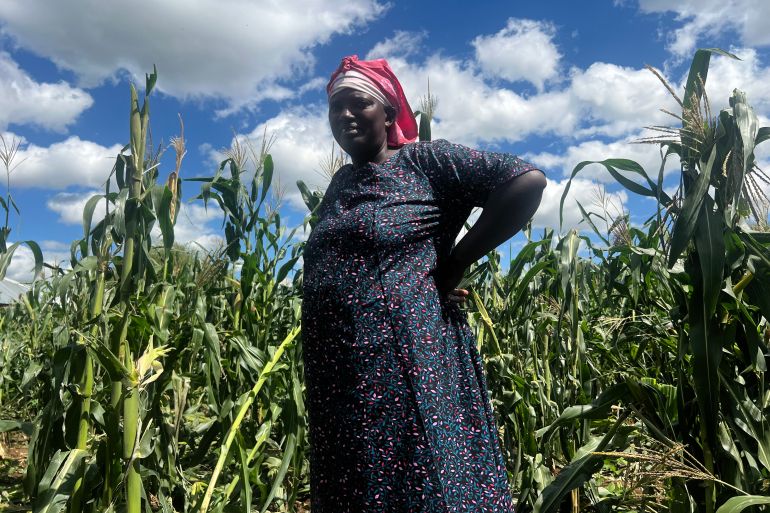
Dodoma region, Tanzania – Theresia Abel Nyoka has received messages on her phone about M-Kilimo and e-Kilimo, digital services designed to help farmers, but she has never registered for either.
“It is simply because we have not been given education. I do not know their importance or benefits,” she told Al Jazeera by phone from Paranga village in central Tanzania’s Dodoma region.
M-Kilimo, a Ministry of Agriculture mobile service, provides market information and farming advice, allows farmers to advertise produce and enables them to ask agricultural extension workers for help. The broader e-Kilimo platform brings government agricultural services together through a website and smartphone app.
Nyoka instead relies on a system she understands. She takes her produce to a warehouse operated through her Agricultural Marketing Cooperative Society (AMCOS), where farmers pool crops for sale at organised auctions during the marketing season.
Jeremiah Luwe, 49, a maize and pigeon pea farmer from Ngomai village in Kongwa district, has tried using M-Kilimo on his smartphone. But he says responses to questions about markets and agricultural inputs can take up to two weeks.
“Sometimes the information arrives too late to be useful. The government should provide a faster system that responds on time and connects us to markets and other farmers,” he told Al Jazeera.
Luwe continues to rely on public meetings, auctions and media reports for market information.
Their experiences highlight a challenge for Tanzania’s digital agriculture initiatives: Making services available does not guarantee that farmers know how to use them or receive information when they need it.
The government is investing in the sector through the $3.62m Data for Digital Agricultural Transformation Joint Programme, which runs from September 2024 to August 2027. The programme aims to strengthen agricultural data systems and expand access to digital services, with targets of improving digital literacy for 500,000 farmers and training 500 government extension workers.
The Ministry of Agriculture did not respond to requests for comment on farmers’ concerns about training and the performance of M-Kilimo and e-Kilimo.
Registration does not guarantee use
A 2024 study drawing on Ministry of Agriculture information reported about 7.2 million registered farmers on M-Kilimo, alongside 9,985 extension workers and experts, 24,523 customers and 26,927 sellers of agricultural products.
The platform had recorded 75,623 advisory consultations, of which 73,839 had received replies, the study found. However, the figures do not establish how many farmers actively used the service or whether its responses helped them make better farming and marketing decisions.
The study also identified about 400,000 incomplete registrations and documented challenges with digital literacy and access. Some farmers struggled to use the USSD service, which allows people to access certain functions through basic mobile phones without an internet connection. No comparable figures have been published for e-Kilimo.
In Kingale village, Adam Rashidi grows pigeon peas and sesame on more than six hectares (15 acres). He uses a basic mobile phone and obtains market information through organised auctions. He also knows the traditional market, where buyers get produce directly from farms.
“If I am given education, I can register,” he told Al Jazeera. He could not name anyone in Kingale who used M-Kilimo or e-Kilimo.
Shaban Omary, another pigeon pea farmer, has no smartphone and gets price information from television. Although M-Kilimo offers access through basic phones, the 2024 study found that some users struggled with the service.
“If I knew how to use it, it would help me because I would know more and it could help me move forward,” Omary said.
Shaban Ndatwa, chairman of the Kingale AMCOS, has attended seminars on the Tanzania Mercantile Exchange (TMX), the country’s commodity exchange, but says he has not registered and has never received training on how to use it.
“I can see that people still do not understand the systems properly,” he said.
Praygod Malisa, an agriculture specialist with Rikolto East Africa in Tanzania, said larger farmers often have better access to market information.
“They know where buyers are, hold contracts and can afford to store produce until prices rise,” he told Al Jazeera. “Smallholders may not know where to find markets and often sell quickly because they need money.”
Digital tools could help narrow that gap, Malisa said, but only if farmers can use them. He cited training, smartphone and SIM-card access, connectivity and cost as barriers, and urged programmes to reach farmers in their villages.
“If farmers do not know the technology, it has no benefit for them,” he said.
Malisa also called for programmes to be assessed on their impact rather than registration figures alone. “We need to know how many farmers were reached, how many benefitted and whether there is real data and evidence of success,” he said.
Building on existing market systems
Digital services are not the only way farmers obtain market information. Cooperatives and organised commodity markets already connect smallholders with buyers.
The Warehouse Receipts Regulatory Board, a government agency under the Ministry of Industry and Trade, oversees a system that allows farmers to deposit produce in licensed warehouses. The Tanzania Mercantile Exchange provides an organised marketplace for commodity trading, including produce stored under the warehouse receipt system.
These arrangements give farmers established routes to market. Digital services could complement them by helping farmers access timely price information, identify buyers and explore markets beyond their immediate areas.
“Farmers need information about prices, buyers and markets beyond their immediate areas to make better production and marketing decisions,” said Kadeghe Goodluck Fue of Sokoine University of Agriculture.
Vedalinda Asiya, 35, a sesame and maize farmer from Chilanjilizi village in Kongwa district, registered for M-Kilimo after a friend introduced her to the platform. But she says it has not provided the market prices and timely agricultural information she needs. The main benefit she has experienced is information about subsidised fertiliser, which she followed up on and obtained.
“I have not seen its direct benefits. It does not give me market information, particularly prices. I have only seen information about subsidised fertiliser, which I followed up on and accessed,” she told Al Jazeera.
Mahadia Tunga, cofounder and executive director of the Tanzania Data Lab, said digital services could become more accessible by working through communication networks that farmers already trust.
She suggested using WhatsApp groups run by extension officers and combining digital services with offline information and support from local enterprises and agricultural officers.
“Utilise existing, deeply embedded social architectures … to make information accessible, highly conversational and interactive,” she told Al Jazeera.
None of the farmers interviewed could identify someone they knew who had earned more through M-Kilimo or e-Kilimo. That does not establish that the platforms have failed nationally, but it highlights the difference between registering farmers and demonstrating tangible benefits.
For Ndatwa, the potential remains worth exploring.
“I really want to learn. If I am given training on how M-Kilimo and e-Kilimo work, I believe they would help me a lot and open me up to many things I do not know, including information on agricultural input subsidies and markets,” he said.
This article is published in collaboration with Egab.