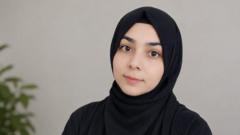
In a highly competitive field of international students vying to get UK scholarships, Afghan women have additional challenges to navigate.
Alia had to attend a secret school to prepare for an English language test, in defiance of Taliban restrictions. Before long the institute was discovered and authorities shut it down – so she continued with an online teacher from Canada.
The next challenge was actually sitting the test. Most authorised test centres would not admit female students, Sadat says, in fear of falling foul of the regime’s rules.
After that came the difficulty of finding a UK university willing to recognise a degree earned in Afghanistan.
Throughout the process, both Sadat and Alia say frequent power cuts disrupted their preparations. They also feared a repeat of the nationwide internet shutdown imposed by the Taliban’s supreme leader in September 2025.
Many students also find it difficult to physically apply for the visas, as they often have to travel to neighbouring countries which are making it harder for Afghan nationals to enter.
Having overcome the obstacles, Alia finds the visa brake deeply disappointing: “I want to say to the UK government: don’t treat us like our government. They have deprived us of education, so the global community should have more focus on us.”
In response to the BBC’s questions about the suspensions, the UK’s Home Office pointed to the reopening of the UK Resettlement Scheme for refugees, “including Afghan women and girls”. It also said it was introducing “named sponsorship and refugee study routes”, which would give refugees “a safe pathway to come to the UK and rebuild their lives”.
However, the Home Office did not answer specific questions about whether these routes would be open to women in Afghanistan who are not classified as refugees, such as Sadat and Alia, or how many places would be available to Afghans.
Data from the Higher Education Statistics Agency shows that fewer than 400 of the more than 680,000 international students in the UK in 2024-25 were from Afghanistan.
The Home Office did not respond to a question about how many of those students went on to apply for asylum, but previously said that between 2021 and September 2025, the number of Afghan asylum claims amounted to 95% of the study visas issued. It says its policy aims to address disproportionate levels of student asylum claims and ease pressure on the system.
We asked Zainab Rezaie, an Afghan student who moved to Birmingham in 2024 and later applied for asylum, why she made that choice.