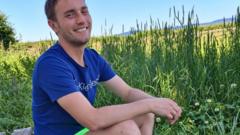
Hugo’s father, William Flint Cahan, who has attended each day of the inquest with other family members, says there was “complacency” by staff, as well as a lack of care.
He maintains his son’s death was “preventable had the level of care been as it should have been.”
Hugo’s brother, Jolyon, who is an NHS doctor, says the “litany of failures, both incompetence and dishonesty, that pervaded the care of both patients was harrowing.”
Over the past 12 years, local coroners have sent at least 29 Prevention of Future Deaths (PFD) notices to the Trust. These are sent to an organisation when a coroner identifies problems which, if not dealt with, could lead to further deaths.
The BBC has analysed the reports which cover both in patient and community services. In more than half of cases there had been a failure to properly assess the risk the patient posed to themself or to others. Poor communications between staff, other agencies and families were also repeatedly highlightedy.
The strongest warnings were about poorly carried out observations and falsified records – basic care needed to keep patients safe.
A report in 2021 by the coroner that carried out the Flint Cahan inquest warned that “a culture of impunity existed” at the Trust where “inaccurate and misleading recording of clinical records was tolerated.”
In 2024, two further reports highlighted observations being missed then records falsified to suggest patients had been checked.
In response to one of the PFD’s, the Trust said extensive training programmes and quality checks were introduced.
In 2025, a fourth report, into the death of a young woman, again highlighted falsified observation records. The coroner said, “despite assurances” from the Trust in numerous action plans”, the inquest had “revealed widespread concerns” about how observations were carried out across two wards.”
Other serious concerns raised in the reports include, how staff have responded to emergencies, with delays in resuscitation and – on one occasion – nursing staff giving chest compressions to a patient’s stomach rather than their chest.
Brian Dow of the mental health charity, Rethink, is calling for a national register of patient safety to keep tabs on the type of care mental health units across the country are providing.
“We have been here before” with poor observations, records being falsified and unacceptable care, he says.
“We have got to have a better approach to patient safety in what are the most difficult and most vulnerable wards with the people who are the most unwell.”