
Imee Marcos bats for additional funds for health workers
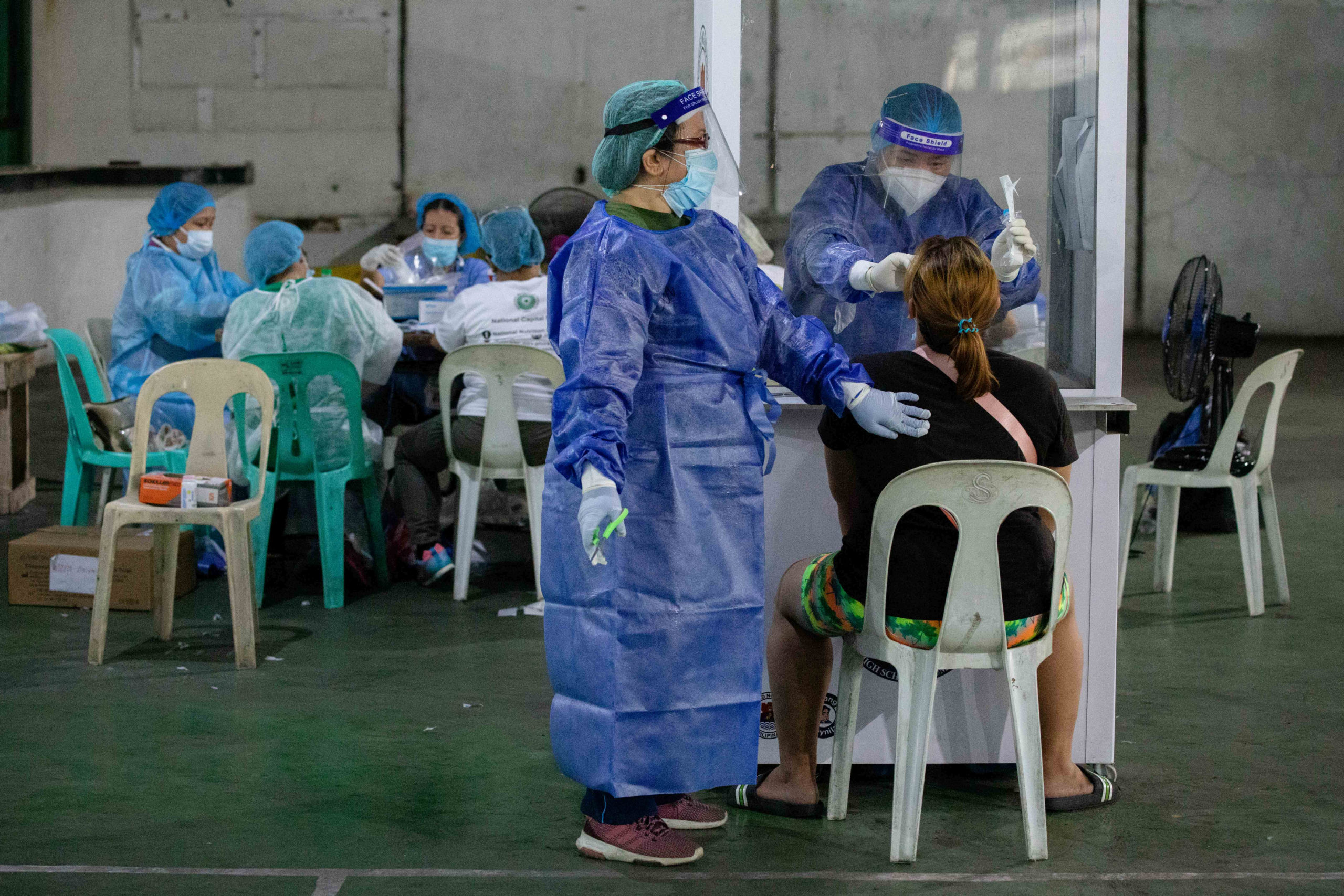
FILE PHOTO: A healthcare worker performs a swab test in Tondo, Manila, Philippines, October 8, 2020. REUTERS/Eloisa Lopez
MANILA, Philippines—Senator Imee Marcos on Saturday stressed the need for the government to allocate funds to address the pleas of healthcare workers who have called for additional equipment and facilities in the time of the COVID-19 pandemic.
The Philippines is swamped with positive COVID-19 cases with the country home to 165,716 active cases after 12,576 new ones were tallied in the Health Department’s latest bulletin.
Marcos said that at least P33 billion is readily available to increase the health care capacities and worker protection while also alleviating the unemployment situation among registered nurses including those repatriated overseas.
“Tama na ang penitensya ng ating mga doktor, nars, at may sakit. Ilabas na ang GAA (General Appropriations Act) 2021 Contingent Fund under the Office of the President na Php13 billion, at yung calamity fund o NDRRMF (National Disaster Risk Reduction and Management Fund) na Php20 billion,” said Marcos in a statement.
FEATURED STORIES
(Doctors, nurses, and the sick have done enough penitence. Bring out the Php13-billion Contingent Fund in the GAA 2021 under the Office of the President, and the calamity fund or NDRRMF of Php20 billion.)
“If we ever needed these emergency funds to pay health workers, buy medicines to treat the sick, and build facilities, it is now!”
Health workers have pleaded with the government to help them curb the effects of COVID-19 while also demanding for better gear against the virus.
Marcos lamented the delay in the creation of a medical reserve corps that would add to the hospital workforce and the domestic manufacture of medical equipment—measures she recommended in Senate bills 1592 and 1708 in 2020.
“It would be useless to add more hospital beds and quarantine facilities without hiring more health care workers. The present crop is on the brink of fatigue, even depression, and may actually get sick,” said Marcos while citing that 110 of the 180 employees of the Philippine Orthopedic Center tested positive for the virus.
For more news about the novel coronavirus click here.
What you need to know about Coronavirus.
For more information on COVID-19, call the DOH Hotline: (02) 86517800 local 1149/1150.
The Inquirer Foundation supports our healthcare frontliners and is still accepting cash donations to be deposited at Banco de Oro (BDO) current account #007960018860 or donate through PayMaya using this link .
Read Next
EDITORS’ PICK


Subscribe to INQUIRER PLUS to get access to The Philippine Daily Inquirer & other 70+ titles, share up to 5 gadgets, listen to the news, download as early as 4am & share articles on social media. Call 896 6000.