
Iran war: Look beyond stocks to understand state of economy, experts say
Yields on 10-year US Treasury bills, a bellwether for inflation, are up nearly 60 basis points since the start of the war on Iran.
Save

 By Megha BahreePublished On 21 Jul 202621 Jul 2026
The US-Israel war on Iran is escalating again and oil prices are on the rise, but experts say the real clues to the state of the economy lie beyond indices and those price points.
“The markets have been somewhat quiescent in the last month or two, but have changed since the war in Iran began,” said Michael Klein, professor of international economic affairs at Tufts’ Fletcher School.
Recommended Stories
list of 4 itemsend of list
Yields on the 10-year United States Treasury bills, for instance, are up nearly 60 basis points since the start of the war on Iran in late February to 4.6 percent on Monday. That is the highest level the yields, a bellwether for inflation, have reached in the past year, Klein said, making it more expensive for businesses to borrow money and slowing the economy.
“Interest rates on bonds will incorporate inflation rate because lenders, when they get paid back, they want to be covered for erosion of their money, which happens through inflation,” Klein said.
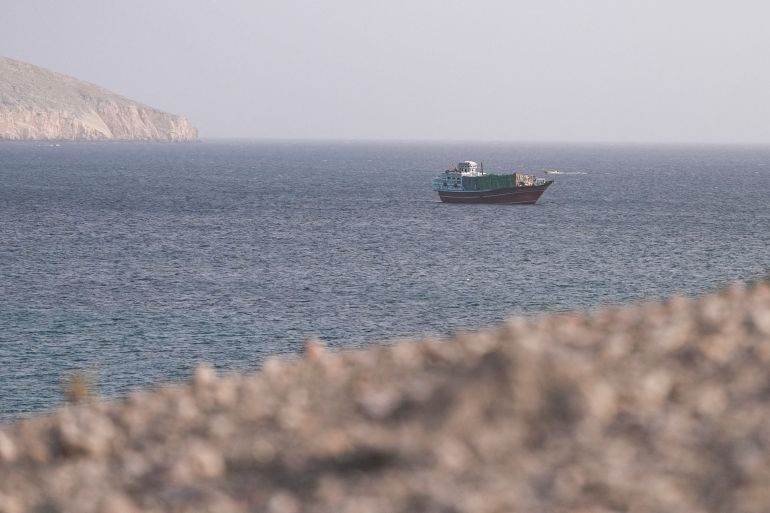
It also shows that investors are expecting inflation to rise more as the Strait of Hormuz, the strategic chokepoint through which 20 percent of the world’s oil travelled before the war, continues to remain practically closed after a brief respite when cargo flows picked up in the days after the US and Iran signed a memorandum of understanding to extend their ceasefire.
That brief opening up was reflected in consumer prices, which were down 0.4 percent in June on a monthly basis. That was led by a decline in energy prices, including a 9.7 percent drop in oil prices, according to the Department of Labor’s Bureau of Labor Statistics Consumer Price Index (CPI).
Advertisement
But a month after the MoU was signed, and days after it seemed to fall apart, the benchmark Brent crude reached $91.42 a barrel on Sunday, before falling on Monday to $88.04. The US national average price at the pump for a gallon (3.78 litres) of petrol was at $4, up from $3.87 a week ago.
“Markets are forward-looking. People are discounting what Trump is saying about the war because he says one thing one day and another day another,” Klein told Al Jazeera.
Traders now see a 55 percent chance of a quarter-percentage point interest rate hike in the US in September, according to the CME Group’s FedWatch tool.
Rachel Ziemba, adjunct senior fellow at the Center for a New American Security, agrees that the past month “has gone from overoptimism of what the oil flows will be” as oil prices sold off even before the MoU was signed and on the back of some increase in volumes, to a “correction in the last week as the MoU was falling apart and risk of conflict was increasing”.
In the period before and after the signing of the agreement on June 17, there was more oil than tankers to carry it as trapped vessels exited the Strait of Hormuz, bringing prices lower. “That was not commensurate with longer-term fundamentals,” said Ziemba.
But now, with short-term supplies having dwindled, prices are on the rise again.
“Oil products like gasoline and diesel are in shorter supply than crude oil, and that’s where consumers will feel the pinch because you can’t run a tractor or a car on crude oil,” she said.
Apart from the closure of the Strait of Hormuz, globally some big refineries are also producing less.
For instance, refineries in the Middle East are producing at a much lower capacity because of damage from Iranian attacks. Similarly, Russian refineries too have taken a hit from Ukrainian drones and are producing less.
“Even when crude oil prices dipped, oil product prices hadn’t come down as much because of these shortages,” Ziemba told Al Jazeera.
Government help priced in
Against that backdrop, the S&P 500 has fallen 0.81 percent in the past month, the Nasdaq-100 is down 5.66 percent, while the Dow Jones Industrial Average is up 0.53 percent at 51,839 points, having hit a peak of 53,055 points on July 6.
“Equities have been relatively stable,” said Mariano Torras, chair of the department of finance and economics at Adelphi University. “There’s a great risk that things could get so much worse and there would be consequences for food and security globally, but markets don’t seem to be factoring in these long-term risks.”
Advertisement
Economists are sounding the alarm on food security because with the strait closed, prices of energy-intensive commodities like fertilisers will soar. As the Southern Hemisphere goes into its sowing season, developing countries in Africa and South America, especially, will be hit hardest. Even for countries like India, which is a big consumer of fertilisers per crop produced, this could add to food inflation, Ziemba said.
“The impact will depend on how long the shortages go,” she said. “The best case scenario is higher prices than last year. The worst case, however, is extensive blockage, coupled with droughts elsewhere in the world.”
Torras agreed that parts of the world could be staring at a “grave situation”. But that was not reflected in the stock markets.
“There’s just this presumption that everything will be all right because the government and the US Federal Reserve will step in and help out as they have in the past,” he said, referring to past instances of that including the East Asia crisis of the late 1990s, the 2008 financial crisis in the US as well as the helping hand provided by several central banks during the COVID-19 pandemic, when many slashed interest rates to help businesses.
“Wall Street is pricing in their expectations that they will receive assistance from the government because if there’s too much of a shock, everyone loses and something has to be done. They are pricing that in,” said Torras.
Fletcher School’s Klein agrees.
“Markets go up, and markets go down. It’s a mistake to focus too much on daily or weekly or even monthly fluctuations. As the economist John Maynard Keynes said, markets respond to people’s views. It’s a herd mentality.”